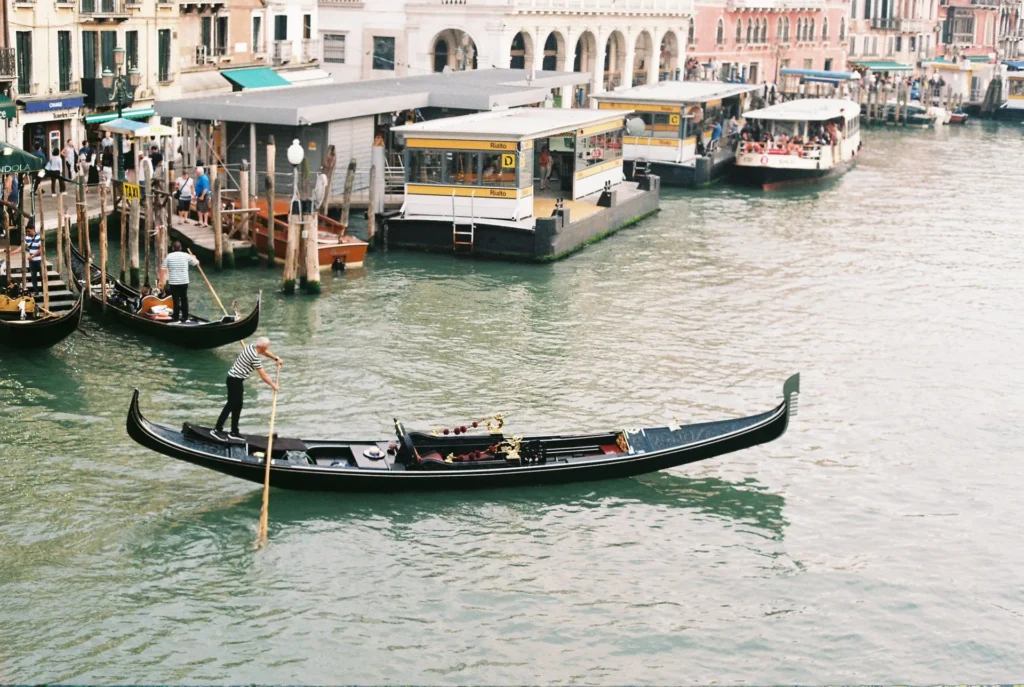
A honeymoon in Italy rewards depth, so pick two to four bases and travel in one direction, ending somewhere you can do nothing at all. The classic route runs 10 to 14 days, north to south: Venice, Tuscany, Rome and the Amalfi Coast. The best months are May and September, tied.
Contents
- The sequencing rule
- The route
- When to go
- Venice
- Tuscany
- Rome
- Amalfi Coast
- Lake Como and Cinque Terre
- Trains and driving
- Entry rules
- FAQs
The sequencing rule
Italy is the country where the checklist trip fails. Four cities in seven days is a tour, not a honeymoon, because every move costs a day: packing, checking out, the train, checking in, and finding your feet again. The sequencing rule is the single biggest upgrade over a checklist trip: pick two to four bases, travel in one direction, and end somewhere you can do nothing at all. North to south is the natural direction, because the trip gets slower and more beach-like as it goes. Venice is the busy start, Tuscany is the slow middle, Rome is the grand middle, and the Amalfi Coast is the slow end. Our best honeymoon destinations guide is the full world list for 2027, and Italy is the country on it that earns a guide of its own.
The route
The comfortable length is 10 to 14 days across two to four places. The classic 12-night route, north to south, is Venice 3 nights, Tuscany 4 nights with one night in Florence and three in a countryside villa, Rome 2 nights, and the Amalfi Coast 3 nights. Fly into Venice and out of Rome or Naples. A second workable 10-day structure is Rome 3 nights, Tuscany 3 to 4 nights, and the Amalfi Coast 3 nights.
Seven days only means two bases. Rome plus Amalfi gives a city-and-coast rhythm, and Venice plus Tuscany gives canals and countryside. Four stops in a week is too much: the trip becomes a tour, not a honeymoon. The region nights guide is Venice 2 to 3, Tuscany 3 to 4, Rome 2 to 3, Amalfi 3 to 4, Lake Como 2 to 3, Sicily 3 to 5, and Cinque Terre 1 to 2.
Three route shapes, one line each: Venice plus Lake Como plus Amalfi, water, drama and coast, May to June and September, 12 to 14 nights; Florence plus Tuscany plus Amalfi, art, countryside and sea, April to June and September to October, 10 to 12 nights; Rome plus Puglia plus Amalfi, history, coast and slow south, September to October, 10 to 12 nights.
When to go
The best months are May and September, tied as the best. May is the sweet spot: warm 20 to 25 degrees, long days, everything open, crowds manageable. September brings the sea still warm, the harvest starting in Tuscany and Puglia, the light turning golden, and the summer crowds thinning. April to early June and mid-September to October are the two windows, and April brings wildflowers in Val d’Orcia and Umbria.
July and August are the other end: Rome and Venice very hot and crowded, peak prices, and the Amalfi coastal road gridlocked with tourist buses. Ferragosto, 15 August, is the day to plan around: most restaurants and shops close, so do not plan a big dinner that week without confirming. October brings the Amalfi boats winding down, but Rome and Florence stay good into October and November. November to March is the cheapest outside Christmas and Carnival, but many Amalfi and island hotels close.
Venice
Venice gets 2 to 3 nights, not five. It is small enough to walk end to end in about an hour, and its prices are the highest in Italy. San Marco and Rialto suffocate at midday, and the evenings after the day-trippers leave are the best of Venice. Stay overnight: the day-trippers fill the streets from 10 AM to 5 PM, and the city belongs to the overnight guests after that. Gondola rides and quiet early mornings are the point, not a checklist of churches.
Tuscany
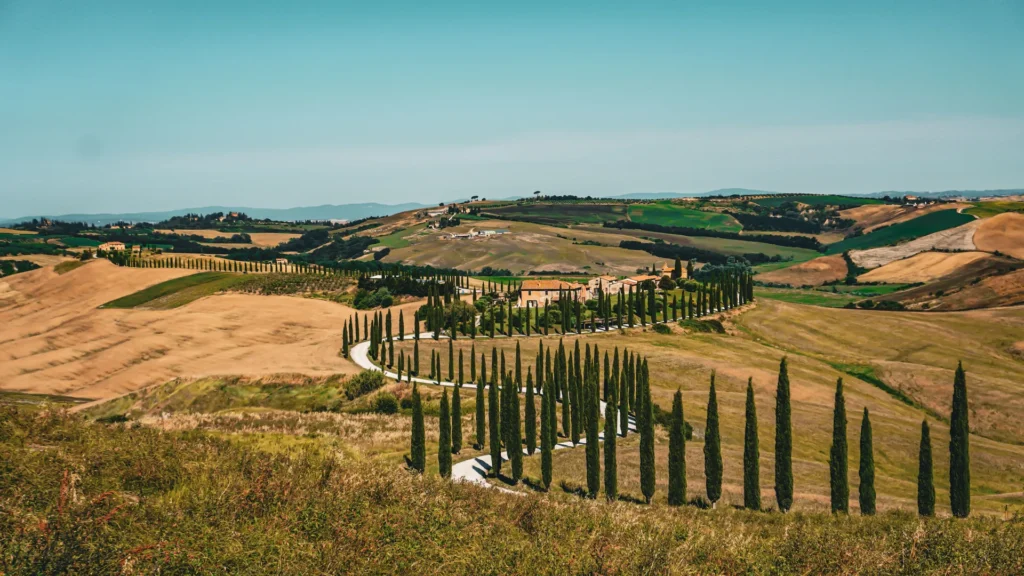
Tuscany gets 3 to 4 nights, in two zones. Chianti sits between Florence and Siena: wine, stone farmhouses, and easy access to both cities. Val d’Orcia sits further south: more remote, more dramatic, the UNESCO landscape. Base in Florence one night for the Uffizi and the Duomo without sleeping in the crowds, then a countryside villa. Thermal baths and hill towns, Castellina or Radda in Chianti as hubs, are the slow days. Tuscany is the region that makes an Italy honeymoon feel like a honeymoon, because it is the one place where doing nothing is the plan.
Rome
Rome gets 2 to 3 nights: evening walks, ancient sites, long dinners. The Trevi Fountain and the Spanish Steps before 8 AM beat the crowds, and pre-booked skip-the-line Colosseum and Roman Forum tickets and a guided Vatican Museums and Sistine Chapel session are the way to do the big sites without the queues. The evenings belong to Trastevere. Fly into Fiumicino airport, and take the train or a pre-booked transfer into the center. Our Santorini guide covers the other classic honeymoon, and the two trips are very different.
Amalfi Coast
The Amalfi Coast gets 3 to 4 nights, on 50 km of UNESCO coastline: cliffs, pastel towns and lemon groves. The gateway is Naples airport, then 90 minutes by private transfer or ferry. Stay put in one town rather than visiting every town, and go in May or September. Capri is a day trip, not a second base. The Amalfi Coast is the slow end of the trip, and it works because you stop moving: one town, one terrace, and the sea below.
Lake Como and Cinque Terre
Lake Como and Cinque Terre are the optional swaps, not additions: add one, and drop something else. Lake Como is lakeside glamour, May to September, with the villas and the water. Cinque Terre is the colourful villages and the coastal walks, May and September, 1 to 2 nights. Both are the choice for couples who want the water without the Amalfi crowds.
Trains and driving
Take the train between cities. The high-speed Frecciarossa connects Rome, Florence, Bologna and Verona. Rome to Florence runs about 90 minutes, Rome to Naples about 1 hour 10 minutes, and Florence to Naples about 2 hours 42 minutes on Italo, then the Circumvesuviana commuter train to Sorrento, allowing extra time for the change and checking the EAV timetable. The classic Venice, Florence and Rome trip needs no car at all.
Rent a car only for the countryside: the Tuscany hill towns, Umbria, the Dolomites, Puglia, Sicily and Sardinia. Pick it up at a station or airport outside the historic center, because the historic centers enforce automatic ZTL camera fines for unauthorized vehicles. Pick up and drop off rental cars outside the centers.
Do not drive the Amalfi coastal road yourself in July and August: it gridlocks. Take the ferry or a private transfer instead. The average honeymoon costs about $5,500 per couple for roughly 7 days, and 69 percent of couples take one, according to The Knot 2026 Real Weddings Study. Book 6 to 9 months out for peak-season rooms, with summer Amalfi and Venice hotels 6 to 9 months out and Rome, Florence and Venice spring and autumn hotels 4 to 6 months ahead. Our Europe guide covers the continent in full, and the route above is the Italy trip itself.
Entry rules
ETIAS is not operating as of late October 2026. In July 2026 the EU agency that runs it confirmed the start had moved into 2027, with no firm date announced. When it launches, the fee will be EUR 20, about $22, with a transition period. Check the entry rules at booking time, and use the only official source, travel-europe.europa.eu. Ignore any site selling an ETIAS today.
The EU Entry/Exit System is fully operational at all Schengen external borders since 10 April 2026, and it replaced passport stamps. The Venice access fee for 2026 is over: it ran 3 April to 26 July 2026 on 60 days, EUR 5 if paid at least four days ahead and EUR 10 after that, for day visitors entering the historic center from 8:30 AM to 4 PM. Overnight guests are exempt, but they should request the free exemption code through the city portal, cda.ve.it, and many hotels send the link. For 2027 the city has confirmed 72 fee days from 26 March to 15 August, with prices and rules due by 31 December 2026, so treat the 2026 amounts as history, not as 2027 fact.
The US State Department rates Italy Level 2, exercise increased caution, with the advisory issued 10 September 2026. The emergency number is 112.
FAQs
May and September, tied as the best. May is warm 20 to 25 degrees with long days and manageable crowds. September brings the sea still warm, the harvest in Tuscany and Puglia, and the summer crowds thinning. July and August are very hot and crowded, with peak prices.
Ten to 14 days across two to four places is comfortable. The classic 12-night route is Venice 3, Tuscany 4, Rome 2 and the Amalfi Coast 3. Seven days only means two bases: Rome plus Amalfi, or Venice plus Tuscany. Four stops in a week is too much: the trip becomes a tour, not a honeymoon.
North to south, Venice to Amalfi, because the trip gets slower and more beach-like as it goes. Fly into Venice and out of Rome or Naples. The route is Venice 3 nights, Tuscany 4, Rome 2 and the Amalfi Coast 3, and it works because it never rushes.
No, not for the cities. The classic Venice, Florence and Rome trip needs no car at all, because the high-speed trains connect them. Rent a car only for the countryside: the Tuscany hill towns, Umbria, the Dolomites, Puglia, Sicily and Sardinia. Pick it up outside the historic center, because the centers enforce automatic ZTL camera fines.
The 2026 season is over. It ran 3 April to 26 July 2026, EUR 5 if paid at least four days ahead and EUR 10 after that, for day visitors. Overnight guests are exempt but should request the free exemption code through the city portal. For 2027 the city has confirmed 72 fee days from 26 March to 15 August, with prices and rules due by 31 December 2026.
No single total fits every couple, because the sources disagree. One 2026 guide, honeymoonbookings.com, gives per-night couple ranges: Amalfi Coast $200 to $800, Tuscany $150 to $1,000, Venice $300 to $1,500, Lake Como $200 to $1,200, Rome $200 to $800, Sicily $100 to $800, and Cinque Terre $200 to $400. Summer hotels on the Amalfi Coast and in Venice run 30 to 50 percent higher than shoulder season.
Italy is safe for most couples, with the usual care: pickpockets at the big sites and on crowded trains, and the heat in July and August. The US State Department rates Italy Level 2, exercise increased caution. The emergency number is 112.
This guide is for planning only and is not travel advice. Check entry requirements before a 2027 trip to Greece or Italy, and check the CDC destination page before booking international travel.