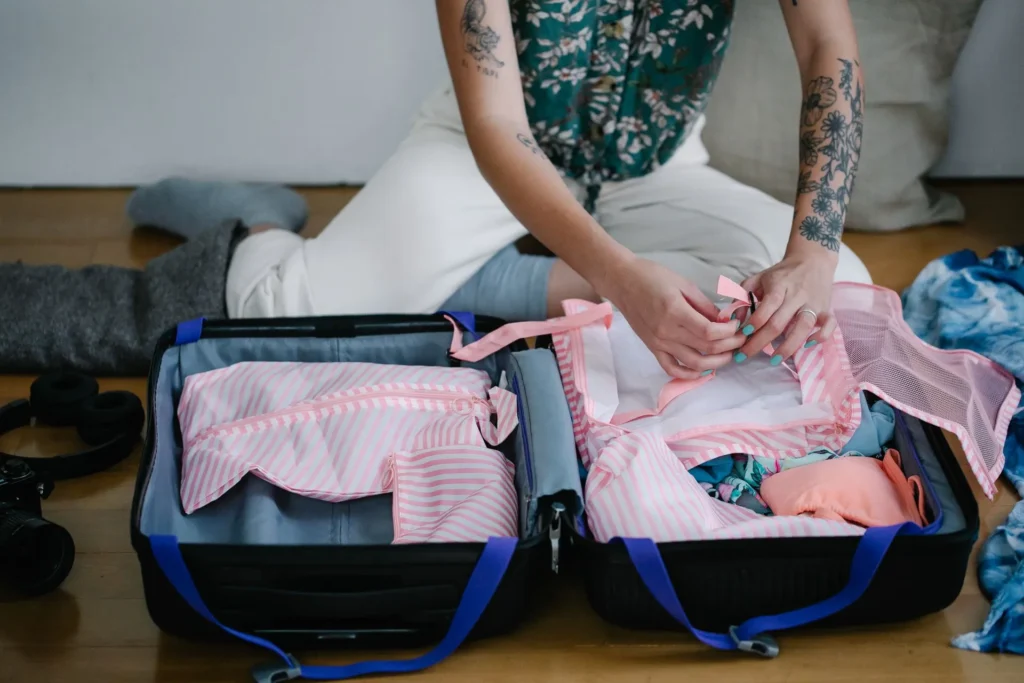
Packing for a babymoon is different from packing for a normal trip. The bag is smaller, the comfort matters more, and the medical kit comes first. This babymoon packing list is built in order: medical safety first, comfort second, clothes third, and a real what-to-leave list at the end, so the bag stays light. Tick each item off as you pack it.
Contents
- Medical kit: pack first
- Comfort
- Clothes
- Toiletries and basics
- What to leave
- How to pack it
- Carry-on vs checked bag
- Packing for the flight
- Packing for the drive
- One-bag checklist
- FAQs
Medical kit: pack first
The medical kit is the first thing in the bag, not the last. Pack prenatal vitamins, regular medications and prescriptions, and the pregnancy-safe basics that are commonly listed for travel: TUMS, Pepcid, Tylenol, and Unisom. These are commonly listed, not a prescription: check with your OB-GYN before you take anything new. Pack printed prenatal records and your OB’s contact information, and a fit-to-fly letter if your airline requires one. Pack your travel insurance details, and compression socks, medical grade 15 to 20 mmHg, for flights over two hours. Keep the whole kit in your carry-on, not in checked luggage, so it is with you if the bag is delayed.
Comfort
Comfort is the second thing in the bag. Pack a travel sleep wedge or a small pregnancy support pillow, not a full-size pillow: the full-size one does not fit a carry-on. Pack a maternity belly band, and slip-on supportive shoes, one half-size up for swelling. Pack a 32 oz reusable water bottle, and pregnancy-safe snacks: nuts, fruit, protein bars, and crackers. Skip raw fish, deli meat, unpasteurised cheese, and soft-serve while travelling. Pack sunscreen, mineral SPF 50, and a hat and sunglasses. Pack a small hand fan if you are going somewhere warm, and a light blanket or shawl for the flight.
Clothes
Pack light, and pack for comfort. Two to three loose maternity dresses, or soft pants and leggings, are enough for a short trip. Pack a maternity swimsuit, one-piece or tankini with belly support, and cosy pajamas and a robe. Pack one statement outfit for dinner, and flat comfortable shoes. Pack a light jacket or layers for cool evenings. The rule is simple: if it does not stretch, it does not go in the bag. Tight, non-stretch clothes will not fit by day three, so leave them at home.
Toiletries and basics
Pack the basics you use every day, in travel sizes. Pregnancy-safe skincare, lip balm, hand sanitiser, tissues, and a small first-aid kit. Pack a phone charger and a portable charger, and keep the OB’s after-hours number and portal access in your phone. Pack a book or a downloaded show for the flight, and a small notebook if you like to write. Keep the basics in one small bag, so you can find them without unpacking everything.
What to leave
What you leave behind matters as much as what you pack. Leave the high heels: balance changes during pregnancy, and swelling makes them uncomfortable. Leave the full-size pregnancy pillow: take the sleep wedge instead, it fits the bag. Leave tight, non-stretch clothes that will not fit by day three. Leave valuables you would worry about: expensive jewellery, extra cards, and anything you would miss if it were lost. Leave non-refundable bookings: leave the rigidity, keep the flexibility, and book refundable where you can. Leave heavy guidebooks: your phone and one list are enough. The bag should feel light when you lift it. If it does not, take something out.
How to pack it
Pack the medical kit in the carry-on, and the rest in the checked bag or the car. Roll the clothes, do not fold them, so they take less space and wrinkle less. Put the shoes at the bottom, the clothes in the middle, and the toiletries on top. Keep the water bottle and the snacks where you can reach them. Check the list once more before you zip the bag, and check it again at the door. Our how to plan a babymoon guide covers the nine steps around the packing, from OB clearance to the day you leave. Our budget babymoon guide covers the money side of the trip. What to wear for a Charleston trip depends on the season.
Carry-on vs checked bag
The carry-on holds what you need on the journey: the medical kit, the water bottle, the snacks, the sleep wedge, the phone charger, the book, and one change of clothes. The checked bag holds the rest: the clothes, the toiletries, the swimsuit, and the dinner outfit. If the checked bag is delayed, the carry-on has enough for the first night. If you are driving, the same split works: the medical kit and the snacks ride in the front seat, the rest in the boot. Never put the medical kit in checked luggage. It is the one bag that must stay with you.
Packing for the flight
For a flight, pack for comfort and movement. Wear the compression socks, medical grade 15 to 20 mmHg, for flights over two hours. Wear slip-on shoes, so you can take them off at security and on the plane. Keep the water bottle full after security, and drink through the flight. Get up and move every hour or two, and walk the aisle when the seatbelt sign is off. Pack the sleep wedge in the carry-on, so you can rest on the plane. Keep the OB’s number and the insurance details in your phone, not in the checked bag.
Packing for the drive
For a drive, pack for stops and stretches. Pack a small cooler with water and snacks, so you do not need to stop for every meal. Pack the sleep wedge and a small pillow for the passenger seat, and a light blanket for naps. Plan a stop every 90 minutes to walk and stretch, and keep the route flexible: a short drive with stops beats a long drive without them. Keep the medical kit in the front seat, not in the boot, so it is with you if you need it. Keep the phone charged, and the OB’s number in it. A drive is the easiest babymoon journey, because you control the pace, the stops, and the music.
One-bag checklist
Tick each item off as you pack it. Medical kit: prenatal vitamins, regular medications and prescriptions, TUMS, Pepcid, Tylenol, Unisom, printed prenatal records, OB contact information, fit-to-fly letter if needed, travel insurance details, compression socks 15 to 20 mmHg. Comfort: travel sleep wedge or small pregnancy support pillow, maternity belly band, slip-on supportive shoes one half-size up, 32 oz reusable water bottle, pregnancy-safe snacks, sunscreen mineral SPF 50, hat and sunglasses. Clothes: two to three loose maternity dresses or soft pants and leggings, maternity swimsuit, cosy pajamas and robe, one statement outfit for dinner, flat comfortable shoes, light jacket or layers. Toiletries and basics: pregnancy-safe skincare, lip balm, hand sanitiser, tissues, phone charger and portable charger, book or downloaded show. Left behind: high heels, full-size pregnancy pillow, tight non-stretch clothes, valuables, non-refundable bookings, heavy guidebooks.
FAQs
Pack the medical kit first: prenatal vitamins, regular medications and prescriptions, printed prenatal records, your OB’s contact information, a fit-to-fly letter if needed, travel insurance details, and compression socks for flights over two hours. Keep it in your carry-on.
Medical grade compression socks, 15 to 20 mmHg, are the commonly listed level for flights over two hours. Check with your OB-GYN before you buy them, and wear them on the flight, not just in the bag.
No. A full-size pregnancy pillow does not fit a carry-on. Pack a travel sleep wedge or a small pregnancy support pillow instead, and use the hotel pillows for the rest.
Two to three loose maternity dresses, or soft pants and leggings, a maternity swimsuit, cosy pajamas and robe, one statement outfit for dinner, flat comfortable shoes, and a light jacket or layers. If it does not stretch, it does not go in the bag.
Leave high heels, the full-size pregnancy pillow, tight non-stretch clothes, valuables you would worry about, non-refundable bookings, and heavy guidebooks. The bag should feel light when you lift it.
Pack the day before you leave, and check the list at the door, not on the morning of the trip.
Yes. Pack pregnancy-safe snacks: nuts, fruit, protein bars, and crackers. Skip raw fish, deli meat, unpasteurised cheese, and soft-serve while travelling. Keep the snacks where you can reach them.
This guide is for planning only and is not medical advice. The best time for a babymoon is usually the second trimester, weeks 14 to 28, according to the American College of Obstetricians and Gynecologists. Talk with your healthcare provider before you travel, and check the CDC destination page and your airline’s pregnancy cutoff before booking international travel.