Introduction
Switzerland was never on my “someday” list until a friend sent me a photo of the Lauterbrunnen valley and I genuinely thought it had been edited. It hadn’t. I ended up building a trip around that one photo. Zurich, Interlaken, and Lauterbrunnen were the core of it, and I stretched the rest of the route (Zermatt, St. Moritz) on a later trip and through a fair bit of research when I couldn’t fit everything into one visit.
If you’re planning a first trip and only have five days, that’s actually enough. You won’t see the whole country nobody sees the whole country but you can string together mountains, lakes, and a couple of proper old towns without ever feeling like you’re sprinting between train platforms.
This is the route I’d hand a friend: Zurich to Interlaken, a day trip to Lauterbrunnen, a day trip up to Jungfraujoch, then down to Zermatt, and finally across to St. Moritz before looping back to Zurich. It’s the same principle behind the 3-day Rome guide keep the days full, not frantic, and let the city do the work.
I’ll flag where I’m speaking from having actually been somewhere versus where I’ve pieced it together from official sources and other travelers’ accounts.
What to Know Before You Go
Getting in. Zurich and Geneva both have easy, well-connected airports, and SWISS runs the most frequent domestic and European connections. Budget carriers like easyJet and Eurowings also fly in regularly. If you’re coming by train from France, Germany, Italy, or Austria, the connections are smooth enough that arriving by rail is genuinely one of the nicer ways to start the trip you get scenery from the moment you cross the border.
Getting around. This is where Switzerland earns its reputation. The rail network, run largely by SBB CFF FFS, is dense, punctual, and reaches places you wouldn’t expect a train to reach. For the mountain sections, cogwheel trains and cable cars pick up where regular rail leaves off.
Half Fare Card vs. Swiss Travel Pass. If your route is fixed and you’re mostly buying point-to-point tickets, the Half Fare Card (50% off most fares) is the better deal. If you’re moving constantly and want to hop on trains, buses, and boats without thinking about tickets, the Swiss Travel Pass is worth it. It also gets you into hundreds of museums and knocks 50% off most mountain excursions. Compare current prices on MySwitzerland before you book, since both are updated seasonally.
Weather. Summer (June–August) is warm with the occasional sudden thunderstorm. Pack a light rain layer regardless of the forecast. Shoulder season (May, September, October) is my honest recommendation: fewer crowds, milder prices, and the hiking conditions are arguably better than peak summer.
Language. German, French, Italian, and Romansh are all official, and the specific mix depends on the region. English is spoken comfortably in every tourist area, so don’t let the language map intimidate you.
Budget. A restaurant main runs roughly 25–35 CHF, more like 45–50 CHF somewhere nicer, and a beer or glass of wine is around 6–7 CHF. Mixing in supermarket meals bread, cheese, fruit for a couple of days a week keeps costs sane without making you feel like you’re missing out on the food scene.
5-day Switzerland itinerary
Day One: Zurich to Interlaken
I landed in Zurich and gave myself half a day in the Old Town before moving on, and in hindsight that was the right call walk from Lindenhof Square for the view over the river, duck into Grossmünster for the stained glass, and if you have a sweet tooth, the Lindt Home of Chocolate is worth the detour. Zurich felt noticeably pricier than the rest of the country once I’d been to both, so I’d treat it as a stopover rather than a full day.
From Zurich, direct trains to Interlaken run roughly every two hours and take under two hours; a route through Bern runs more frequently if you don’t mind one change. I booked mine through SBB’s timetable a few days ahead, and it’s worth doing the same so you have exact departure times before you land.
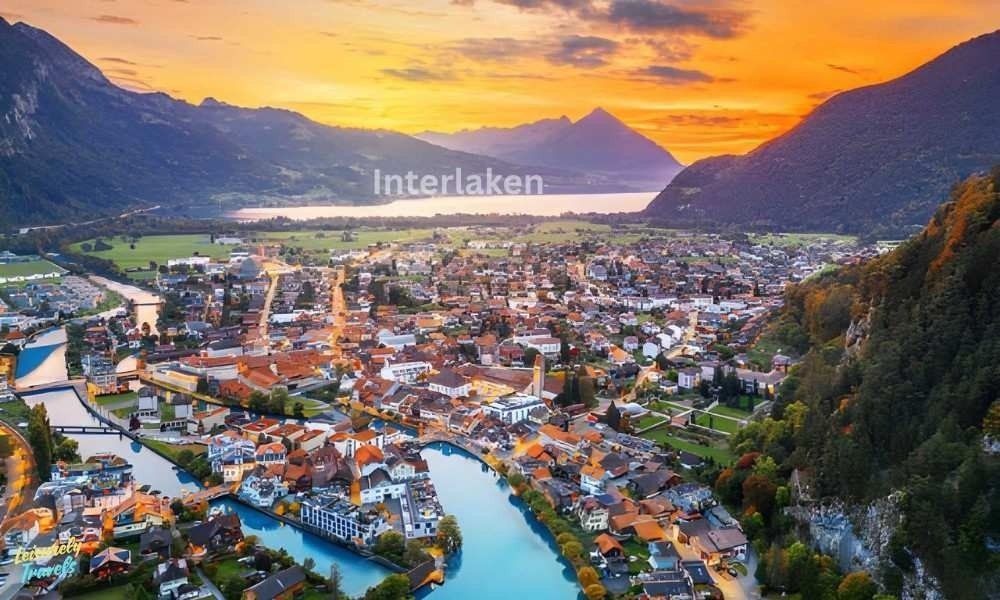
Interlaken sits between two lakes and works as a base rather than a destination in itself — it’s built for day trips and adrenaline. I only had an afternoon free there, so I took the funicular up to Harder Kulm (1,322m), which gave me a first proper look at the surrounding peaks without committing to a full hike.
Where to stay: I stayed at Backpackers Villa Sonnenhof and liked the shared kitchen setup for keeping costs down. The Interlaken Youth Hostel comes up often as a more social alternative if that’s more your style, though I can’t speak to it firsthand.
Day two: Lauterbrunnen day trip
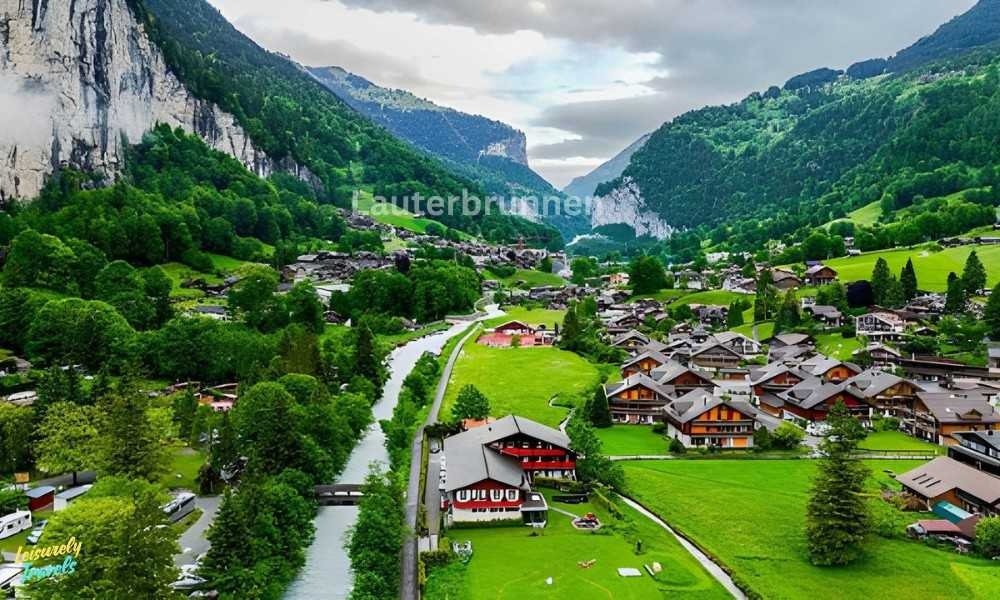
This was the whole reason I planned the trip, so I’m biased, but a twenty-minute train from Interlaken Ost really does put you in one of the most photographed valleys in Europe. Lauterbrunnen is known as the valley of 72 waterfalls, and out of everything I saw that day, Staubbach Falls and Trümmelbach Falls (the latter tucked inside the mountain itself) were the two that stuck with me most.
I didn’t make it up to the Schilthorn myself, but it’s on the list for next time the cable car goes up to Piz Gloria (2,970 m), which featured in On Her Majesty’s Secret Service, and by most accounts the summit view takes in the Eiger, Mönch, and Jungfrau in one sweep.
I based myself in Interlaken and did Lauterbrunnen as a day trip, which worked well. If you want slower mornings instead, Mürren nearby is supposed to be quieter and just as scenic, though I haven’t stayed there myself.
Day three: Jungfraujoch day trip
I’ll be honest I skipped this one on my trip. The weather turned, and at that altitude a cloudy day means you pay full price to see a whiteout, so I made the call to save it for a clearer trip instead. From what I’ve read and heard from other travelers, it’s worth including if your schedule allows.
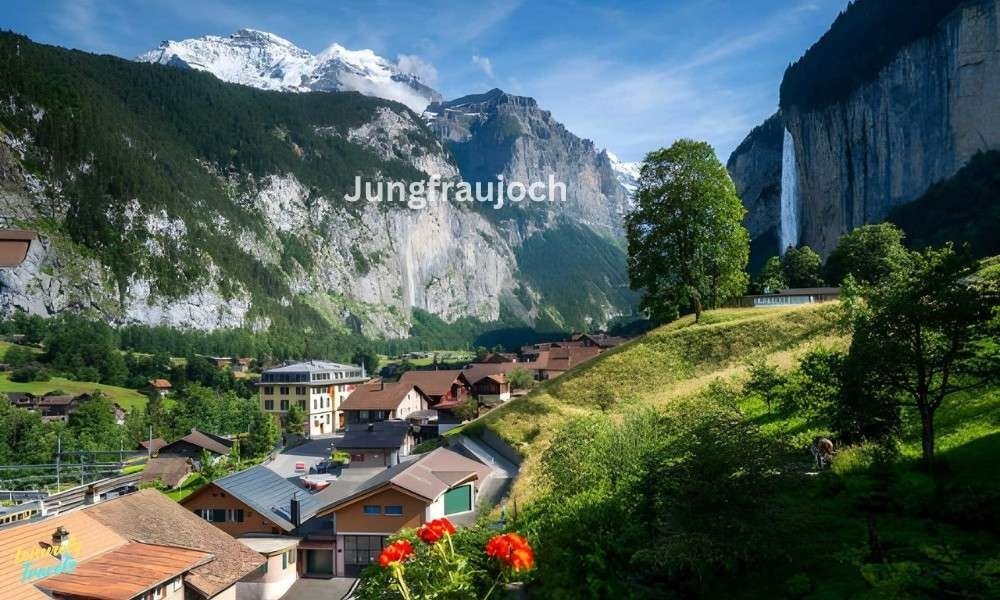
Nicknamed the “Top of Europe,” Jungfraujoch sits at around 3,454 meters and is reached by a combination of train and gondola through the Bernese Alps. Two routes work: from Grindelwald, the Eiger Express gondola gets you to Eiger Glacier Station in about fifteen minutes, and then you connect to the Jungfrau Railway; or from Lauterbrunnen, the older Wengernalp Railway route via Kleine Scheidegg takes closer to ninety minutes but is meant to be the more scenic of the two.
Worth knowing: Jungfraujoch isn’t the highest point in Europe (that’s Mount Elbrus, at 5,642 m) or even in Switzerland Monte Rosa (4,634 m) holds that title. What it does have, by every account I’ve come across, is one of the most dramatic train journeys on the continent. Check the Jungfrau Railways site for current conditions before you book, since the summit is regularly closed due to visibility the Swiss Travel Pass covers part of the fare, and the Half Fare Card reduces the rest.
Day four: Interlaken to Zermatt
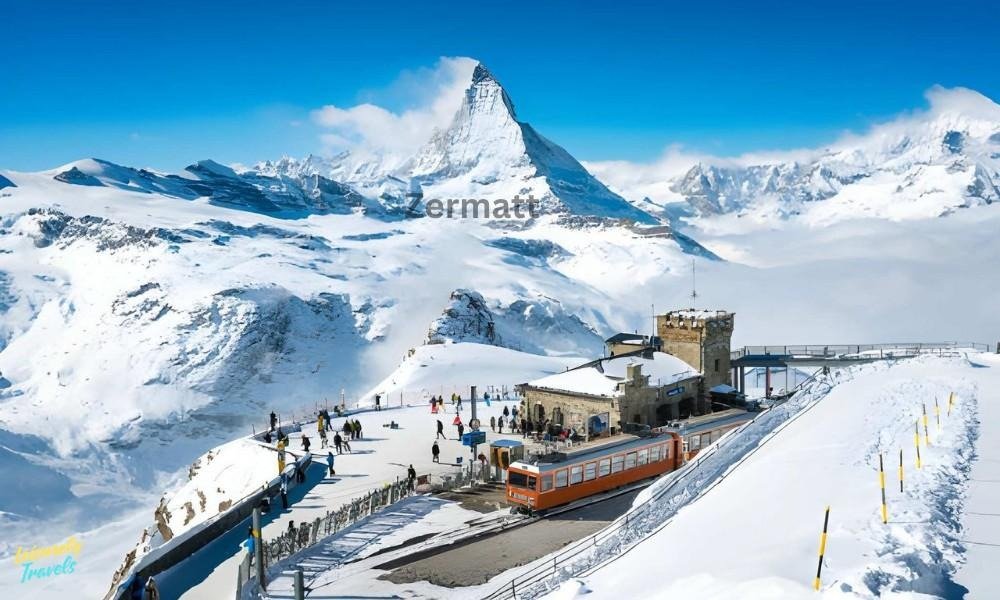
I did make it to Zermatt, on a separate trip the following year, so this part I can speak to directly. The journey involves two changes usually through Spiez and Visp and took me around two hours fifteen minutes total, with trains running roughly every half hour, so a missed connection isn’t a crisis.
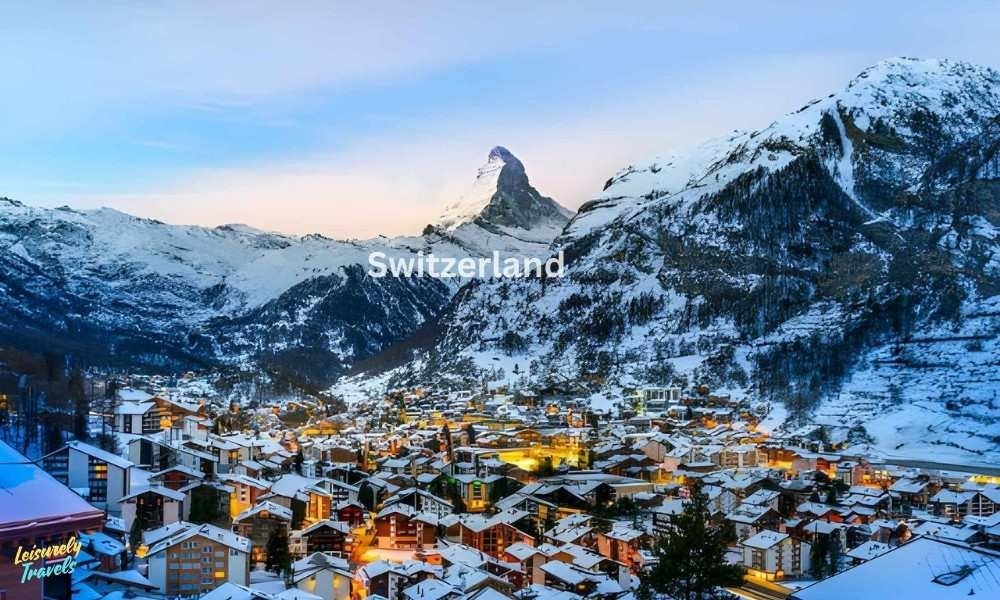
Zermatt itself is car-free, which changes the whole rhythm of the town you either walk or take an electric taxi, and it took me a day to stop expecting traffic noise. The Gornergrat mountain railway is the classic move here: I sat on the right-hand side going up, on a tip from a local, and it gave the best angle on the Matterhorn. I didn’t get to Riffelsee Lake myself, but it’s consistently recommended for a quieter, near-perfect reflection of the mountain on a still day.
Where to stay: I didn’t stay overnight in Zermatt myself. I based out of Visp and day-tripped in so take these as researched rather than tested: Zermatt Youth Hostel or ALPINA Budget Rooms come up often for lower-cost stays, and Hotel Alphubel or Le Petit Charme-Inn for something a step up.
Day five: Zermatt to St Moritz
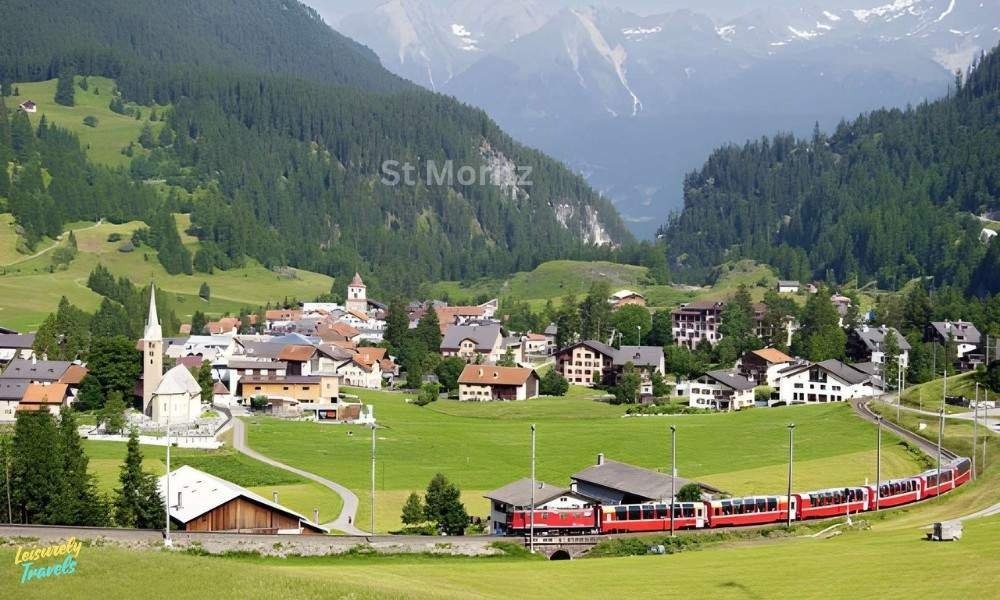
St. Moritz is the one leg of this route I haven’t done myself yet it’s on my list for next time, so everything here is pieced together from the official tourism sources and other travelers whose judgment I trust, rather than firsthand. By most accounts, this is the day worth building the whole trip around. The Glacier Express connects Zermatt to St. Moritz through the heart of the Alps, and seat reservations are required book these well ahead, especially in summer.
St. Moritz has been drawing winter travelers since the mid-1800s and still leans upscale, though you don’t need to stay in a five-star hotel to enjoy it. The usual recommendations are the 4.4km walking loop around the lake, the funicular up to Corviglia (2,486m), or the cable car to Piz Nair (3,057m) for the view. It’s also home to the oldest operating bobsled run in the world, if you want something different.
Where to stay: Since I haven’t stayed in St. Moritz myself, these are options that come up repeatedly in other travelers’ recommendations: Randolin’s Berghotel for a quieter stay with a spa, Hotel Piz for solid mid-range comfort, or Chesa Languard and Boutique Hotel Cervus if you want something with more character.
Getting Back to Zurich
From St. Moritz, the train back to Zurich takes around three to three and a half hours, usually with one change at Chur or Landquart, based on the SBB timetables. If you have extra days, extend south instead: the Bernina Express runs from St. Moritz down to Tirano in northern Italy, and from there a same-day train connects to Milan an add-on I’m planning to build into my next trip.
FAQs
Yes, for a first trip you won’t see everything, but this route covers a genuine mix of cities, valleys, and mountains without feeling rushed.
Only if you’re moving around a lot; if your route is fixed, the Half Fare Card is usually cheaper.
May, September, or October good weather, fewer crowds, better prices than peak summer.
By most accounts yes, but check the weather first a cloudy day means you pay full price to see a whiteout.
No the train network covers this entire route comfortably; I didn’t rent a car once.
Yes, more than most of Europe, but mixing in a few supermarket meals keeps costs manageable.
Final Thoughts
Five days won’t give you all of Switzerland, but this route gives you a genuine cross-section of it city, valley, glacier, and lake, with just enough train time in between to actually watch the country go by. I’ve done the Zurich-Interlaken-Lauterbrunnen stretch myself and would go back tomorrow. Zermatt I’ve since added; St. Moritz and Jungfraujoch are the two I’m still saving for a return trip, and I’ll update this once I have.
If you’re stitching this into a longer Europe trip, two of our other guides pair well with it: 3 days in Rome.