

Introduction
Somewhere between the Matterhorn and the glacial peaks of the Engadin, a train earns the odd nickname of the world’s slowest express. The Glacier Express Switzerland route has run this exact line since 1930, and speed was never really the point.
This journey unfolds more like a slow-motion film than a train ride. Panoramic windows stretch overhead, turning ordinary daylight into something worth watching for eight straight hours. Every valley, tunnel, and viaduct along the way feels built for exactly this kind of unhurried travel.
Connecting St. Moritz and Zermatt, the route covers roughly 291 kilometers through the heart of the Swiss Alps. It’s less a way to get somewhere and more a destination in itself, one that rewards patience over urgency. This guide covers everything worth knowing before boarding the Glacier Express Switzerland experience, from ticket classes and pricing to the exact stops along the route, the best time to ride, and where to stay on either end.
If this train is just one stop on a bigger trip, our 5-day Switzerland itinerary maps out how to fit it alongside other cities too.
What Is the Glacier Express?
Billed as Europe’s slowest express, the Glacier Express Switzerland route links St Moritz in the Engadin skiing area with Zermatt, at the foot of the Matterhorn. This narrow-gauge train covers just over 290 km in around 7½ hours, averaging 24 mph.
Spectacular Swiss scenery unfolds outside the panoramic windows the entire way, often while lunch gets served alongside a glass of Swiss white wine. It’s less a race and more a slow reveal of the Alps.
MySwitzerland describes it best: a journey for the senses, from Engadine right through to the Matterhorn. On the relaxing route between dazzling St. Moritz and equally sophisticated Zermatt, the train delights travelers with scenic attractions and properly impressive technical engineering.
High panoramic windows open up unobstructed views of some actually unique landscapes, the kind that make the slow pace feel like the whole point rather than a drawback.
A Brief History of the Glacier Express
The Glacier Express Switzerland story begins on 30 June 1930, at 07:30 in Zermatt. Three companies ran it jointly at first: the Visp-Zermatt-Bahn (VZ), the Furka Oberalp Bahn (FO), and the Rhätische Bahn (RhB). Its name honored the Rhone Glacier, near Gletsch on the Furka Pass.
After the First World War, Switzerland steadily gained popularity as a winter and summer holiday destination, at least for those who could afford it. That demand shaped this train’s early years, though it initially ran summer only, since both the Furka Pass and the Oberalp Pass were snowed over in winter.
Construction on the Furka Base Tunnel started in 1973. By June 1982, the tunnel opened and replaced the old FO line entirely. That single change disconnected the train from its namesake glacier but also made year-round operation possible for the first time between Zermatt and St. Moritz.
On 7 July 2008, the Albula and Bernina railways earned joint recognition as UNESCO World Heritage Sites. Two years earlier, on 23 July 2010, a Glacier Express train derailed near Fiesch on the Matterhorn Gotthard Bahn line, killing one passenger and injuring 42 others, caused by the train traveling too fast due to human error.
Direct service to Davos was discontinued in 2013 due to decreasing passenger numbers and unfavorable economic conditions. In 2018, two additional summer services were introduced to the schedule.
The Full Route: Every Stop Explained
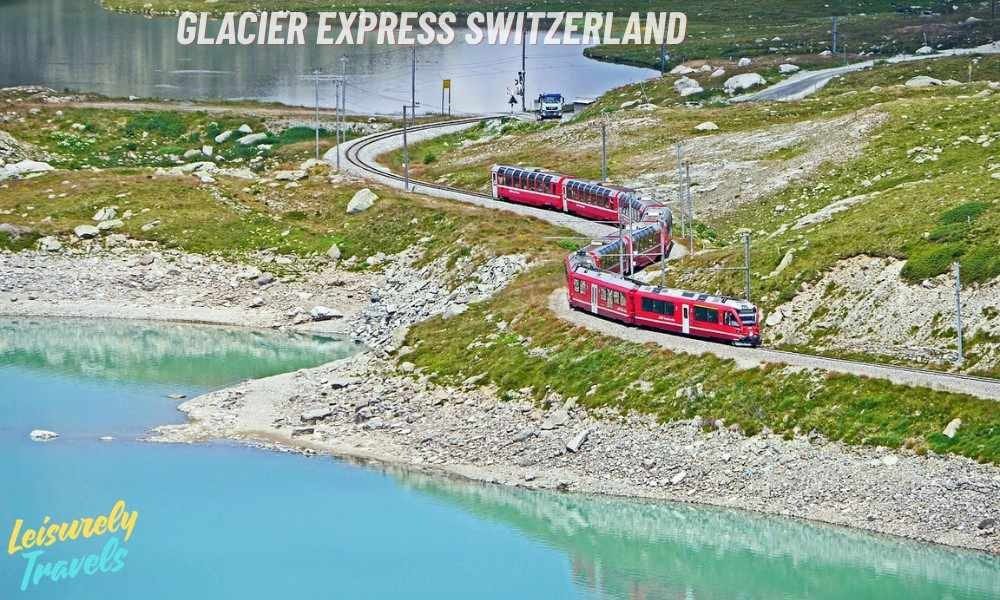
From St. Moritz to Chur
The Glacier Express Switzerland journey starts at St. Moritz, sitting 1,775m above sea level, with scenery beginning almost immediately after departure. The train passes Samedan and Bever on the high Engadin plateau before entering the Albula Tunnel at 1,815m, then continues through Preda toward the Landwasser Viaduct.
Many publicity photos get taken here, often looking back through the large opening window in the bar car. The short Solis Viaduct follows soon after, along with Juvalt Castle, dating from 1216, guarding a pinch point in the valley below.
The train reaches Filisur at 1,032 m, then Thusis at 720 m, following the Posterior Rhine down to Chur, sitting at 585 m. Chur works as a dead-end terminus, meaning the train physically changes direction here before continuing.
From Chur to Andermatt
Leaving Chur, the train enters the Rhine Gorge, passing back through Reichenau before snaking alongside the River Rhine. The climb continues slowly toward Ilanz at 698 m, then Disentis at 1,142 m.
Disentis marks a genuine handover point, where the Rhätische Bahn (RhB) hands the train over to the Matterhorn Gotthard Bahn (MGB), and the locomotive itself gets changed, making it worth stretching your legs during this stop.
From Sedrun at 1,404m, the train finally climbs to its summit, the Oberalp Pass, the highest point of the entire journey at 2,033m. Andermatt follows at 1,447 m, then Hospental at 1,452 m and Realp at 1,538 m.
From Andermatt to Zermatt
After Realp, the train enters the 15.4 km Furka Tunnel, opened in 1982, before emerging at Oberwald, 1,368 m. From there, Brig sits at 691m, followed by Visp at 651m, where the route shifts onto the ascending Mattertal Valley.
Stalden comes next at 799m, then St. Niklaus at 1,127m and Randa at 1,408m. Täsch works as an important rail terminal too, since Zermatt itself stays car-free, and shuttle trains carry passengers the rest of the way in. The journey finally ends in Zermatt, at 1,616m above sea level, after nearly eight hours on the rails.
Must-See Sights Along the Way
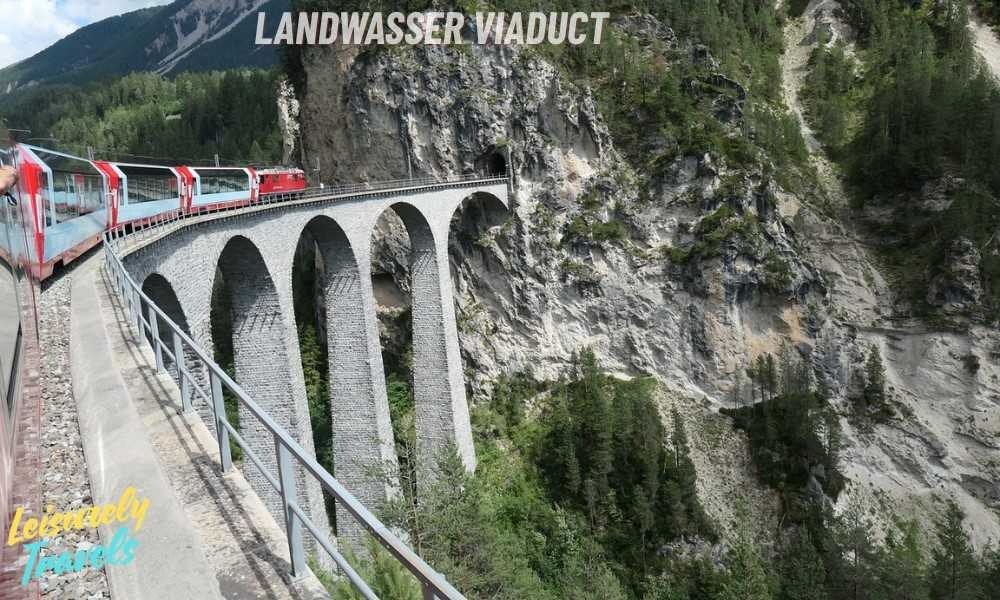
Landwasser Viaduct
Seeing the Landwasser Viaduct ranks as one of the most iconic parts of the entire Glacier Express Switzerland journey. The track curves dramatically right into the tunnel on the other side, a moment most passengers remember long after the trip ends.
Many travelers get their best photos here, often looking back through the large opening window in the bar car for an unobstructed shot. The viaduct itself stands as a genuine landmark to behold, and once the train crosses on top of it, the panoramic view stretches out unlike anywhere else on the route.
Preda & Bergün Spirals
The stretch between Preda and Bergün counts among the most spectacular sections of the whole route. This part includes:
- Six towering viaducts along the way
- Three spiral tunnels
- Two helical tunnels
That combination creates a really unique experience, hard to find anywhere else on rails. This section also holds UNESCO World Heritage status, offering a view unlike anything else in the world.
Rhine Gorge
Known as the Swiss Grand Canyon, the Rhine Gorge captures the best of Switzerland in one stretch: white mountains, green spruce trees, and clear lakes all at once. Passing through it feels honestly awe-inspiring, whether the trip falls in winter or summer.
Beyond the train window, the Gorge is also worth exploring between Ilanz and Reichenau, whether on foot, by bike, or by rafting boat. Either way, the country’s best views tend to show up right here.
Oberalp Pass
The Oberalp Pass marks the highest point of the entire journey, sitting at 2,033m above sea level. A small lighthouse stands here too, a 2010 replica of one that once stood at Hoek van Holland, with the original now housed in Rotterdam’s Maritime Museum.
The source of the Rhine sits just a stone’s throw from this spot. Travelers passing through in winter get the landscape topped with stunning snow, though honestly, the view stays glorious in any season, possibly the most breathtaking stretch of the whole route.
The Route’s Key Stops
Zermatt
Zermatt greets travelers as a quaint, scenic mountain town at the end of the line. Fondue, the après-ski scene, and a cozy mountain lodge stay all wait here, alongside the true star of the Swiss Alps, the Matterhorn itself.
Chur
Chur holds the title of the oldest city in Switzerland, a town filled with German influence in both food and culture. Medieval architecture, several museums, and plenty of bars give it real depth beyond just a train stop, making it worth its own detour in Glacier Express Switzerland planning.
Our full Chur guide covers the Old Town, HR Giger Museum, and best day trips in more depth.
Davos
Davos sits as a Swiss Alps ski town in the canton of Graubünden, popular for anyone chasing a proper ski resort stay. The Glacier Express once ran directly here, connecting the mountain town straight to the Matterhorn.
That direct service was discontinued in 2013, though, due to decreasing passenger numbers and unfavorable economic circumstances. Reaching Davos today means changing trains at Filisur instead.
Brig
Brig offers a charming Alpine stop in the canton of Valais, close to the Italian border. Thermal baths and a 17th-century castle both make for an easy detour here. Valais also holds the title of Switzerland’s largest wine-growing region, worth knowing for anyone who appreciates a good glass along the way.
Andermatt
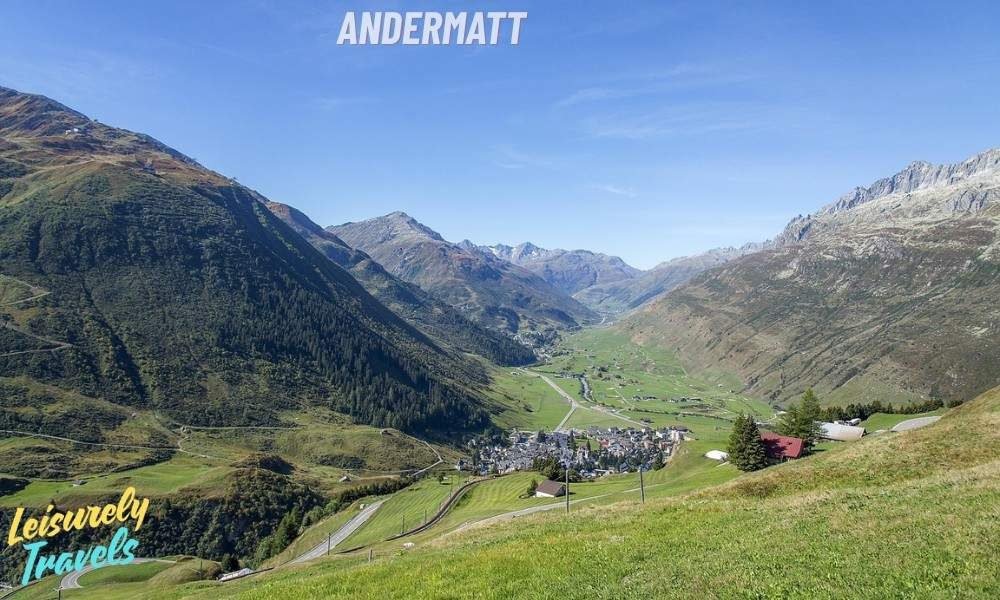
Andermatt has a charming atmosphere similar to Zermatt, with traditional Swiss architecture and streams flowing directly through the village. Cable cars here connect to ski and snow excursions nearby. Come the holidays, the village comes alive with properly festive activities.
St. Moritz
If pure luxury tops the wish list, St. Moritz fits the bill easily. This destination carries a long-running legacy of glitz and glam, long favored by the well-heeled. Anyone drawn to finer things and a lavish atmosphere tends to appreciate what St. Moritz offers.
Choosing Your Class
Second Class
Second-class seats are arranged 2+2 across the car width, with bays of four around a table on both sides of the aisle. Anyone on a tighter budget doesn’t need to miss out on the full Glacier Express Switzerland experience here.
The scenery, panoramic views, in-car service, and food options all stay the same as first class. The main difference comes down to layout: four top tables on both sides here versus four-tops on one side and two-seaters on the other in first class. Unless a two-seater table gets specifically reserved, a party of two may end up sharing space with other travelers.
First Class
First-class seats are arranged 2+1 across the car width, with bays of four around a table on one side of the aisle and bays of two on the other. The biggest benefit here: couples can book a face-to-face table for two, while solo travelers can grab a seat that’s both window and aisle, with no one sitting alongside.
Food options open up considerably too. A full menu covers cocktails, wine, coffee, tea, dessert, and snacks, or a proper meal service instead. Menu highlights include a salad course with a generous bread basket, a chicken entrée, and a tomato-lentil dal for anyone leaning vegetarian.
It’s likely the best meal available on any form of public transportation. It won’t compete with a fine restaurant exactly, but as a train meal, it holds up remarkably well.
Excellence Class
Excellence Class takes the experience further with one deluxe panoramic car, seats arranged 1+1 so every single seat guarantees a window view. An exclusive bar, on-board entertainment, and a dedicated concierge host round out the setup, setting a truly new standard for train travel.
Guests get served champagne and amuse-bouches first, followed by an exquisite five-course meal paired with wine, plus complimentary coffee, juice, and snacks throughout the ride. This tier carries a surcharge of CHF 540 on top of a first-class ticket.
Travelers who’ve ridden it describe a full concierge experience, help with bags, attentive service throughout, and even a Glacier Express tilting glass handed over as a souvenir at the end of the trip.
Tickets, Fares & How to Book
Travel on the Glacier Express Switzerland route requires two separate things: a seat reservation that secures a place on the train and a valid ticket for the class booked. These aren’t the same purchase, and mixing them up is an easy mistake.
Before booking, a quick currency converter helps translate these Swiss Franc fares into your home currency.
Fares (one-way, Zermatt–St. Moritz):
- 2nd class: 159 CHF (or a Saver Day Pass from 52 CHF)
- 1st class: 272 CHF (or a Saver Day Pass from 88 CHF)
- Reservation fee: 54 CHF (2nd/1st class), 540 CHF (Excellence Class)
- Children under 6 travel free, without their own seat
- Children aged 6-16 pay half fare, but still owe the full adult reservation fee
Step 1: Make a seat reservation.
Head to the official glacierexpress.ch and run an inquiry for the journey. Reservations open 93 days ahead. Select Classic Glacier Express for standard 1st or 2nd class, or choose Excellence Class instead. When entering personal details, switching the “Reduction” drop-down to Reservation only drops the price down to just the reservation fee itself.
Step 2: Buy a Saver Day Pass.
Travelers with a Swiss Travel Pass, Interrail, or Eurail pass already hold valid tickets, so no additional booking is required. Everyone else benefits from buying a Saver Day Pass instead of the pricier full-flex ticket sold directly on the Glacier Express site. These passes cover unlimited travel across Switzerland for a full day, including the entire route, and go on sale six months ahead, though they must be bought at least one day before travel.
Is the Swiss Travel Pass Worth It?
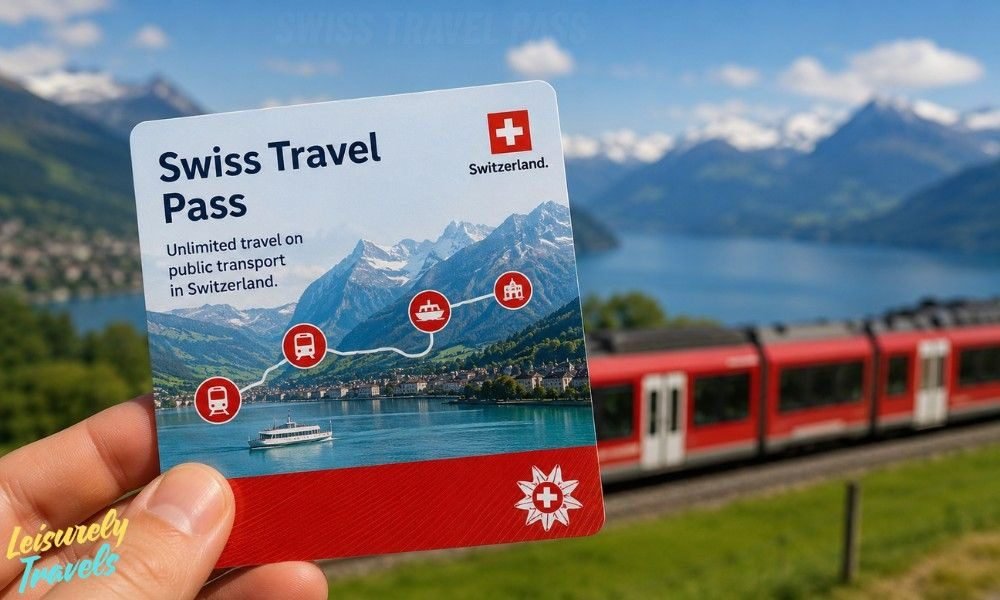
The route sits fully covered by the Swiss Travel Pass, Swiss Travel Pass Flex, and GA travel card, so anyone already holding one can skip straight to booking tickets. Interrail and Eurail passes work too, covering both the Rhätische Bahn (RhB) and Matterhorn Gotthard Bahn (MGB) sections that make up the whole route.
Coverage has actually improved over time. Until 2017, Interrail and Eurail only gave free travel on the RhB portion, with just a discount on the MGB stretch. Both now offer full free travel across the entire journey. All that’s still needed on top is a seat reservation, and even Excellence Class stays within reach for 1st Class passholders willing to book that specific reservation.
For travelers without any of these passes, a Saver Day Pass offers unlimited travel across Switzerland for a full day, including the entire Glacier Express route. These go on sale six months ahead, a separate timeline entirely from the 93-day reservation window covered earlier, so it’s worth planning the pass purchase well before locking in a seat.
What’s It Like Onboard
The coaches themselves were specially built in 2006, clean, comfortable, and carpeted, with air-conditioning and glass skylights adding to the panoramic feel throughout. Both classes come with power sockets and free WiFi, so staying connected during the eight-hour ride isn’t an issue.
Every seat gets a free printed route guide, mapping out the key sights along the way, plus free headphones for tuning into the onboard commentary. An infotainment system runs touristic announcements in various languages, and video screens at the end of each car track the train’s exact location in real time.
There’s a bar car onboard, though visiting it isn’t really necessary. Staff come through the train taking orders for tea, coffee, alcoholic drinks, soft drinks, and snacks, along with a 2-, 3-, or 4-course lunch that can be pre-booked ahead of time.
Meals get served right at the seat, on real china with proper cutlery, a choice of starters, main courses, and desserts, paired with a solid wine selection. For 1st and 2nd class specifically, that usually means a three-course meal, either from the daily menu or à la carte.
Bringing a personal picnic and bottle of wine works fine too, if that’s more the style. More on the train’s design and technology is available on the official Glacier Express site.
Shorter Route Options
Not every trip needs the full eight hours. A four-and-a-half-hour trip between Brig and Chur covers the tight-schedule version, ideal for anyone on a short break in Switzerland who still wants the country’s wondrous sights and plenty of photos worth showing off back home.
Tickets can also be bought for any segment of the full route, not just the complete Zermatt–St. Moritz stretch. The shorter the route, the less expensive the ticket ends up being, which is useful for anyone on a tighter budget who still wants a taste of the experience.
A Zermatt-to-Chur segment, roughly four stops before the end of the line, works well for this, with Chur itself making an actually worthwhile stop beyond just the shorter fare.
If a fairy-tale village fits into the wider trip, our Gruyères travel guide is an easy add-on from this part of Switzerland.
Best Time to Ride the Glacier Express
The Glacier Express Switzerland route runs almost year-round, apart from a short break from late October to mid-December, when the MGB carries out annual maintenance on the Brig-Zermatt line. During that window, the same route stays reachable using local trains instead, with a change of train or two along the way.
Every season actually brings something different to the table. Summer fills the landscape with lush greenery and sunny meadows, while winter turns the same route into a snow-topped wonderland. Autumn adds its own gorgeous colors into the mix too.
Honestly, doing the ride twice makes sense, once in summer and once in winter, since both versions of the journey feel like entirely different trips.
Travel Tips Before You Board
Choosing eastbound or westbound makes little to no difference on this route. Scenery stays the same in either direction, and every train covers the whole run in daylight, even through winter. Zermatt does arguably work better as an ending point for a short stay, though.
Seat side matters a bit more. Heading eastbound from Zermatt, the right-hand side wins along the Mattertal Valley toward Brig, though river scenery in the Rhine Gorge sits on the left instead. The train changes direction at Chur, and from there to St. Moritz, the right-hand side takes over again, including the curve onto the Landwasser Viaduct. Westbound simply flips all of that to the opposite side.
For photography, the panoramic windows work great for viewing, though double glazing gets in the way of reflection-free shots. Two workarounds help here: the droplights in each car’s entrance doors open, and in the bar car, one large window on each side pulls right down, a favorite spot for photographing landmarks like the Landwasser Viaduct. Just don’t lean out; staff won’t mind a careful camera through an open window.
Luggage racks sit inside each car, right near the seating area, for stowing bags during the ride. Officially, only one piece of luggage is allowed per person, and no dogs are permitted onboard.
Nearby Excursions
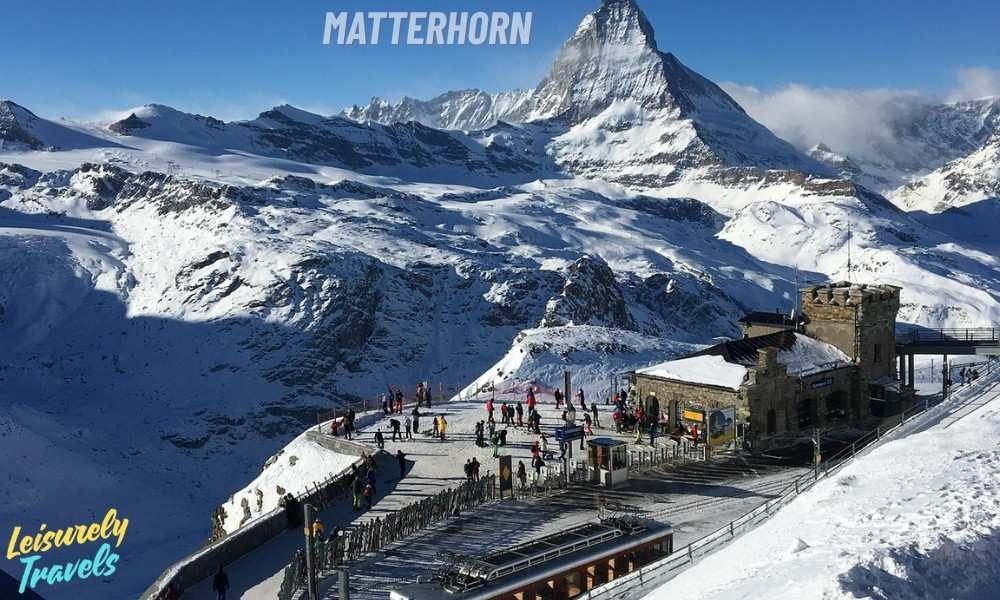
Matterhorn Glacier Paradise delivers a view of French, Italian, and Swiss mountain giants all at once, from a vantage point sitting almost 4,000m up. Gornergrat offers something similar, looking straight onto the Matterhorn alongside 28 other four-thousand-meter peaks, from 3,131 m.
Over on the St. Moritz side, Lake Sils sits at 1,800m and holds Europe’s highest-altitude regular scheduled passenger boat service. Corvatsch rounds things out as the eastern Alpine region’s highest-altitude summit station, at 3,303 m, a genuine paradise for skiers and hikers alike.
Where to Stay in Zermatt and St. Moritz
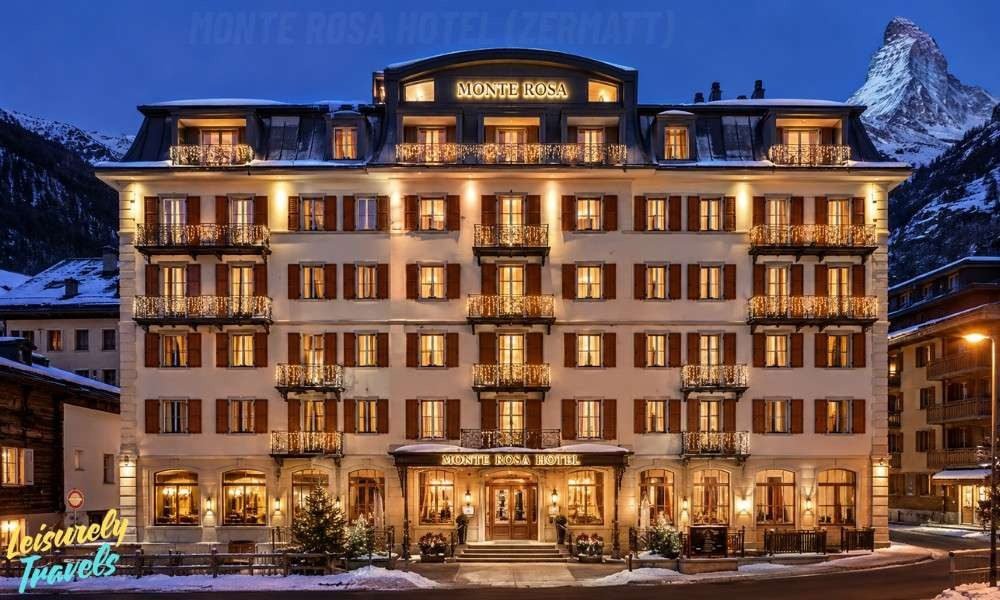
Monte Rosa Hotel (Zermatt)
The Monte Rosa Hotel stands as the most famous and historic place to stay, budget allowing. As the first hotel ever built in Zermatt, it was from here that Edward Whymper set out on the first successful ascent of the Matterhorn in 1865.
Sitting right in the center of town, just 400 m from the station, it carries a superb 9/10 review score.
Grand Hotel Zermatterhof (Zermatt)
Sitting directly opposite the Monte Rosa, the Grand Hotel Zermatterhof offers another top-notch option, open since 1879 and carrying that same historic weight in the heart of Zermatt.
Hotel Garni Testa Grigia (Zermatt)
For a much more affordable, down-to-earth choice, Hotel Garni Testa Grigia sits close to the station on Zermatt’s main street, clean and comfortable without the premium price tag.
Hotel Waldhaus am See (St. Moritz)
Just a 4-minute walk from St. Moritz railway station, Hotel Waldhaus am See offers friendly staff and a cozy, family-run atmosphere. The restaurant and breakfast room both open onto a lovely view over the lake, and pricing stays about as affordable as St. Moritz hotels get.
Romantik Hotel Muottas Muragl (St. Moritz)
Perched on a 2,454m-high mountain, the Romantik Hotel Muottas Muragl opened back in 1907 and delivers spectacular views over the Engadin Valley. Getting there takes a short ride by train and funicular from St. Moritz, Samedan, or Pontresina.
Breakfast here comes with what’s widely considered one of the most spectacular hotel-window views anywhere in the region.
FAQS
When’s the best time to take the Glacier Express?
Almost any time works, since the route runs year-round except for a short maintenance break from late October to mid-December. Summer, winter, and autumn each offer a really different look at the same journey.
Should you go first class or second class?
Second class covers the same scenery, service, and food as first class. The main difference is seating layout, so second class works fine for most travelers on a budget.
Which side of the train should you sit on?
Eastbound from Zermatt, the right side wins toward Brig, though the Rhine Gorge view sits on the left. After Chur, the right side takes over again toward St. Moritz. Westbound simply flips all of that.
Do I need both a reservation and a ticket?
Yes. A seat reservation and a separate valid ticket (or Saver Day Pass) are both required; they aren’t the same purchase.
Is the Glacier Express Switzerland trip worth the price?
For most travelers, yes, especially with a Saver Day Pass or Swiss Travel Pass covering the ticket cost. The scenery alone tends to justify the reservation fee on top.
Final Thoughts
Nearly a century since its first run in 1930, the Glacier Express Switzerland journey still holds up as one of the slowest, and somehow most satisfying, ways to cross the Alps. Eight hours feels long on paper, but between the Landwasser Viaduct, the Oberalp Pass, and everything in between, the time tends to disappear.
Whether that’s second class with a packed lunch or excellence class with champagne poured tableside, the view outside stays exactly the same. That’s really the whole point.
From Zermatt to St. Moritz, or any shorter stretch in between, this remains the kind of trip worth planning a whole Switzerland itinerary around.

