

Introduction
Few places pull off “postcard-perfect” quite like Zermatt. The Matterhorn rises right above town, car-free streets keep things quiet, and somehow both mountains and mood feel bigger here than almost anywhere else in Switzerland.
Planning a Zermatt trip takes a bit more thought than most destinations, though. No airport sits nearby, the town runs entirely car-free, and options for hotels, hikes, and fondue spots multiply fast once you start looking. Getting the details right ahead of time makes the difference between a rushed visit and one that actually feels effortless.
This guide covers everything worth knowing before booking, history, transport, where to stay, what to eat, and the hikes and viewpoints that make Zermatt truly worth the trip. The quick facts below cover the essentials first.
Zermatt at a Glance
| Category | Details |
| Region | Canton of Valais, Switzerland |
| Elevation | 1,608m above sea level |
| Known For | The Matterhorn (4,478m), car-free streets |
| Getting There | No airport in Zermatt; fly into Geneva or Zurich, then train |
| Getting Around | Car-free town; electric buses (free with cable car ticket or Swiss Travel Pass) |
| Best Time to Visit | Ski season: late November–early May; Summer peak: mid-June–early October |
| Hiking & Skiing | 400km of hiking trails; 360km of ski slopes |
| Language | German predominant; English widely spoken |
| Local Perk | Peak Pass (mountain excursions) and Wolli Card (kids under 9) |
| Iconic Ride | Gornergrat Railway Europe’s highest railway |
A Brief History of Zermatt
As recently as 1847, Zermatt was little more than a remote farming village. Within a few years, the “golden age of mountaineering” began, and by the early 1890s, railways started popping up, opening the Alps as a playground for early visitors.
New Year’s Eve of 1927 marked a real turning point, when Zermatt welcomed its first winter visitors to ring in the new year. By 1961, the destination had survived two world wars and the sharp decline in tourism that followed, then experienced a huge tourism boom, the first time winter visitors outnumbered summer ones.
By 1975, Zermatt had become a globally recognized winter destination. The decades that followed brought steady building to keep up with its growing popularity.
How to Get to Zermatt
There are no airports in Zermatt itself, so the closest major airports are in Geneva and Zurich. Whichever one works better for the flight, the train handles the rest of the journey from there. Technically, the closest airport is Sion (SIR), also in the canton of Valais, though it mostly specializes in private aviation, with only a handful of major carriers flying there.
Getting into town only happens by train, since Zermatt runs as a full no-car zone. Flying into Geneva and driving roughly 2 hours 30 minutes to Täsch station is one common route, parking the car there before catching a quick 12-minute train into Zermatt. That return journey runs around CHF 17.20, with trains departing every 20 minutes. It’s worth checking our Currency Converter first if you’re not used to thinking in Swiss francs.
Two railway stations sit in town: the main one, where the Glacier Express and other trains arrive, and a separate station just across the street for Gornergrat. Drivers heading in usually park in Täsch, with frequent trains covering the roughly 10-minute journey from there. Parking in Visp instead and taking the train from there works just as well for anyone planning a Zermatt trip this way.
Getting Around Zermatt
Zermatt stays true to its car-free reputation once you’re actually in town, and it ranks among the most popular holiday destinations in Switzerland partly for that reason. The town itself is small enough that walking covers most of it easily.
Small electric buses handle the only public transport here, along with the odd electric taxi for anyone not up for the walk. Riding the bus is free with any cable car or mountain train ticket, and free entirely for anyone holding a Swiss Travel Pass or Swiss Travel Pass Flex.
Plenty of hotels also offer a free transfer to and from the train station on request, worth asking about before arranging anything else for a Zermatt trip.
A Quick Overview of Zermatt
Tucked into the southwest of Switzerland in the canton of Valais, Zermatt sits at 1,608m above sea level and attracts pretty much everyone who loves mountains. The car-free town ranks among Switzerland’s most popular holiday destinations, largely thanks to one neighbor: the Matterhorn.
Bahnhofstrasse runs as the town’s main artery, lined with cafés, restaurants, shops, and souvenir stops. One thing stands out immediately: over 100 hotels and countless chalets fill the town, yet no large hotel buildings break up the traditional alpine skyline.
Beyond the buildings, Zermatt backs onto more than 400 kilometers of hiking trails and 360 kilometers of ski slopes spread across its surrounding ski areas, more than enough to fill any Zermatt trip with outdoor time. Current trail maps and conditions are available on the official Zermatt Tourism site.
The Matterhorn
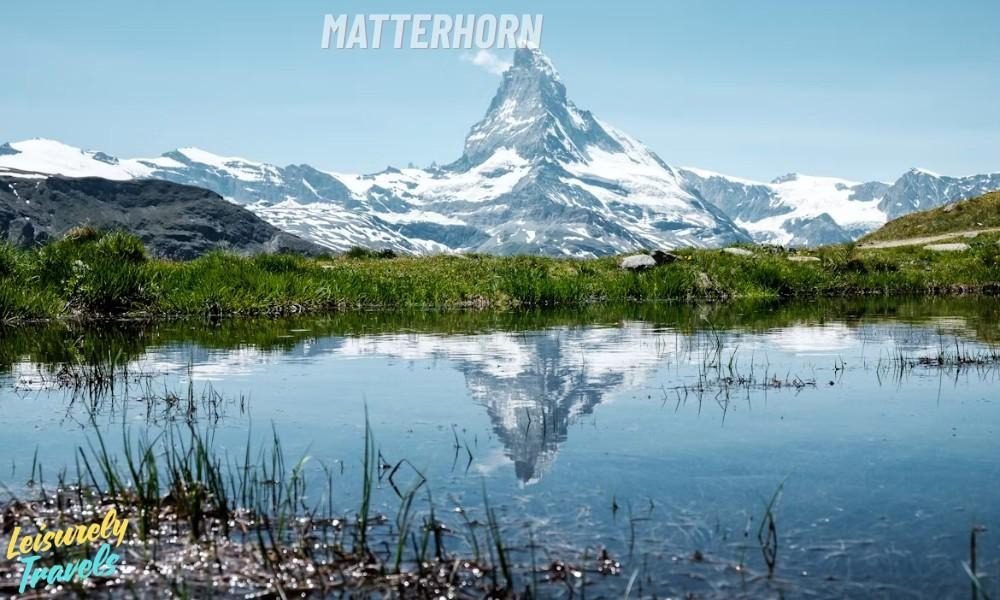
There’s really no escaping the majestic beauty of the Matterhorn, rising 4,478 meters above central Zermatt. Ranked among the most famous and beautiful mountains in the world, it stays visible from the village itself, from spots like the church square or church bridge, without needing to go anywhere special to see it.
The mountain doesn’t stand alone either. 28 four-thousanders, including Monte Rosa and Mont Blanc, come into view from the Gornergrat railway station, turning one landmark into a whole panorama of peaks.
For the best angles, Gornergrat claims one of the top views of Switzerland’s landmark, while Sunnegga or the Rothorn offers something just as magnificent. Actually climbing the Matterhorn, though, should stay reserved for experienced alpinists only. This one’s for admiring on any Zermatt trip, not summiting casually.
Best Time to Visit Zermatt
Ski season in Zermatt runs from late November through early May, though that’s not the whole picture. The Klein Matterhorn station, at 3,883 m, keeps year-round skiing available on several glaciers, snow or no snow down in the valley.
Summer brings its own draw too, with plenty to do once the snow melts on the higher mountain trails. Peak summer season runs from mid-June through early October, making a Zermatt trip well worthwhile almost any time of year. If Zermatt is just one stop on a bigger trip, our 5-day Switzerland itinerary maps out how to fit it alongside other cities.
Where to Stay in Zermatt
Grand Hotel Zermatterhof
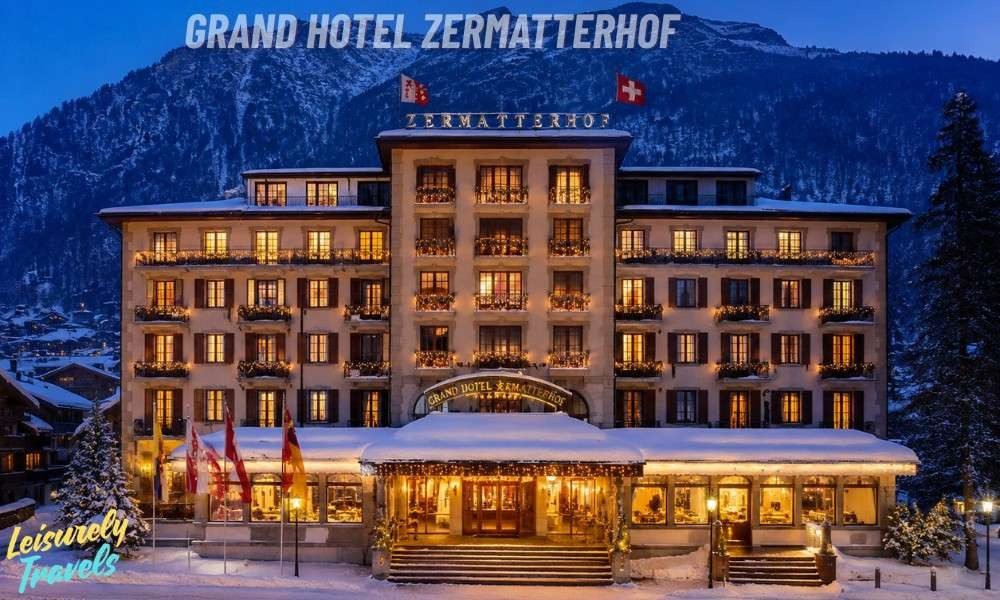
Grand Hotel Zermatterhof ranks as a genuine bucket-list stay, ideal for anyone who loves historical hotels and real luxury and has the budget to match. Well over a century old, it’s stayed in immaculate condition, being one of the first hotels built to accommodate Zermatt’s blossoming tourism boom and centrally located right in the heart of town.
Belle Epoque architecture gives it obvious charm, and the accolades back it up too; Grand Hotel Zermatterhof won “Switzerland’s Best Hotel” in 2021. Alongside Monte Rosa and Mont Cervin Palace, it ranks among the most recommended stays here, each offering bars open to non-residents where the region’s hospitality tradition really shows through.
Rates start around CHF 902 a night.
3100 Kulmhotel Gornergrat
Staying at 3100 Kulmhotel Gornergrat feels like the epitome of a bucket-list experience, waking up, glancing out the window, and seeing the Matterhorn so close it feels almost touchable. As Europe’s highest-located hotel, sitting at 3,100 m above sea level, it also happens to be part of the same hotel group as the Grand Hotel Zermatterhof.
Getting there means arriving in Zermatt first, then heading to the Gornergrat Railway station, conveniently located within walking distance of the main train station in Zermatt Village. Rates here start around CHF 536 a night.
Monte Rosa
Monte Rosa holds a special title among all of Zermatt’s hotels: it was the very first one ever built in town, giving it a genuine piece of local history to go along with a stay.
Hotel Weisshorn
Hotel Weisshorn works well for anyone wanting a high-value, economical stay without giving up location. It sits extremely centrally in Zermatt Village, making it an easy base for exploring on foot. On an earlier Zermatt trip, when I was keeping a closer eye on spending, this place turned out to be a solid pick.
The rooms were basic, but being able to walk to the old town, the train station, and pretty much everything else ended up mattering a lot more than I’d planned for by the third day.
Hotel Bahnhof
Hotel Bahnhof makes a solid pick for budget-conscious travelers, centrally located in Zermatt Village close to the train station, eateries, and all the action. Walking covers most anywhere from here, and hostel-like dorm options help cut costs even further.
Matthiol Boutique Hotel
Matthiol Boutique Hotel suits anyone drawn to boutique stays with real character. This small hotel is built from several wooden houses in a beautiful Swiss mountain style, located on the outskirts of town for a guaranteed dose of peace and tranquility.
Tradition and modernity blend well here; balconies open onto the landscape, bedrooms come with a bathtub overlooking the mountains, and bathrooms include a private sauna.
Budget Alternative: Täsch
Zermatt runs relatively expensive overall, though a handful of cheap hotels do exist in town. For anyone who can’t quite find something within budget, booking a stay in Täsch or another nearby town works as a solid backup plan.
Top Things to Do in Zermatt
Ride the Gornergrat Railway
A far less expensive train journey than most options in Zermatt, the Gornergrat Railway still delivers a jaw-dropping payoff. This iconic cogwheel line winds its way up to 3,089 meters above sea level, where views of the legendary Matterhorn and its surrounding peaks open up all at once.
As Europe’s highest railway, it carries passengers year-round directly from Zermatt station (1,620m) to the Gornergrat peak, a 33-minute journey with a vertical ascent of 1,469m. The 9.4 km line runs through bridges, galleries, and tunnels, threading past larch woods, rocky ravines, and mountain lakes along the way.
Booking the train ticket in advance helps avoid a long queue, and that particular ticket includes admission to ZOOOM, the Matterhorn exhibit at Gornergrat, too. Current schedules and pricing are available on the official Gornergrat Bahn site
Take the Glacier Express
The Glacier Express runs all the way from St. Moritz, an eight-hour journey that ends right here in Zermatt, making it one of the more scenic ways to arrive. Our full Glacier Express guide covers ticket classes, fares, and everything else worth knowing before booking.
Sunnegga Funicular & 5-Lakes Trail
The Sunnegga Funicular covers 2,290 feet in under four minutes, with a return ticket running roughly CHF 20 per person, a quick way up before the real walking begins.
From there, the 5-Lakes Trail leads through Leisee, Stellisee, Grindjisee, and Grünsee, ending near the Mountain Lodge at Seewjin, a 2-hour-20-minute route covering 6.4km. Three of the five lakes reflect the Matterhorn on a clear day, making this one of the more photogenic hikes on any Zermatt trip.
Matterhorn Glacier Paradise
Reaching Matterhorn Glacier Paradise happens strictly by gondola, a smooth ride all the way to the top for sweeping views over the surrounding peaks.
The high point here is Klein Matterhorn, meaning “Little Matterhorn,” a 3,883m ridge sitting between the Matterhorn and the Monte Rosa massif. From this side, the peak shows itself from the southeast, a completely different angle than most other viewpoints around Zermatt offer.
Matterhorn Viewpoint
Getting to the Matterhorn viewpoint is straightforward enough; a street leads directly to a stairway path heading straight up into position. Timing the visit for sunset is worth it when the whole scene turns into something closer to a postcard.
Visit the Matterhorn Museum
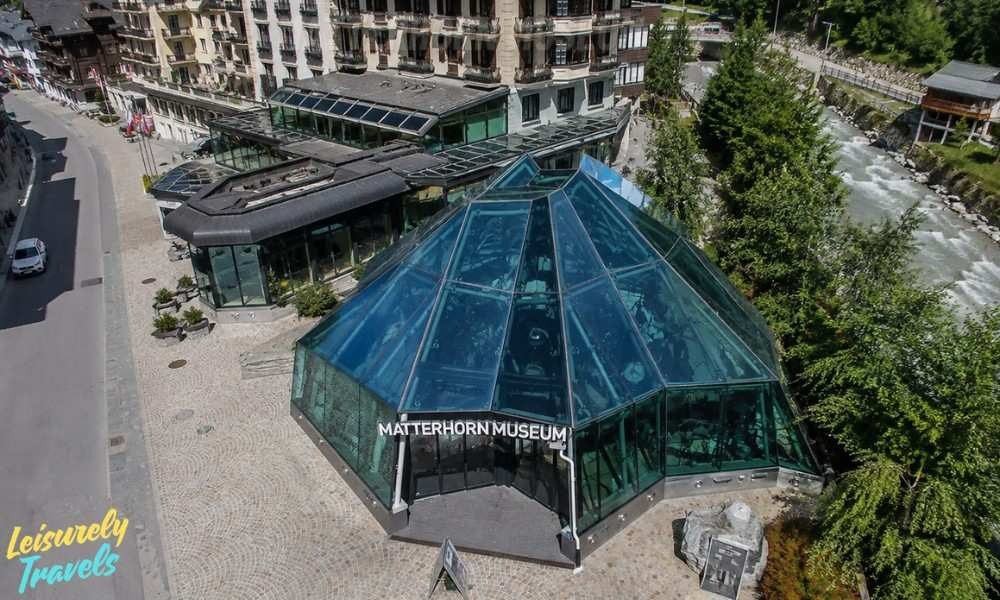
The Matterhorn Museum runs CHF 12 for adults, CHF 10 for seniors, and CHF 7 for kids aged 10-16, with children under 9 entering free. Anyone holding a Swiss Pass for transportation gets in free too.
Just outside, a monument honors Lucy Walker, the first woman to ever summit the Matterhorn, a small but meaningful stop before or after the museum itself. Current hours and admission details are listed on the official Matterhorn Museum page.
Gorner Gorge
Wooden sidewalks wind between the cliffs at Gorner Gorge, showing off the raw power of nature up close. These walkways first opened all the way back in 1886, and they still hold up as one of the more underrated stops near Zermatt.
Charles Kuonen Suspension Bridge
Rising above Randa at 700 m, the Charles Kuonen Suspension Bridge stretches 500 meters long, enough to claim the title of the world’s longest hanging bridge. It opened to the public back in August 2017 and remains one of the more dramatic detours near Zermatt.
Walk Through the Old Town
The Old Town stays small but truly beautiful, packed with shops worth popping into along the way. Bahnhofstrasse, the main street, carries the bulk of it: bars, restaurants, boutiques, souvenir shops, bakeries, and chocolate shops all lined up in a row.
From the stairs of St. Mauritius Church or the Kirchbrücke Bridge, a beautiful view opens up over the south-western face of the Matterhorn, a fitting reward for the walk.
Hiking in Zermatt
Breithorn Summit
For a real outdoor adventure, the hike to Breithorn ranks as one of the easiest four-thousander summits in the whole region. Excellent shape and prior mountain hiking experience still matter here, though; this isn’t a casual stroll.
The route begins and ends at Matterhorn Glacier Paradise, running about 3 hours over 5.4km with 374m of elevation gain.
Höhbalmenstafel and Trift
The hike to Höhbalmenstafel, at 2,665m, ranks among the most important outdoor attractions around Zermatt, rewarding hikers with wonderful views over the Trift Gorge, the Matterhorn, and Monte Rosa. The full route takes about 5-6 hours, covering roughly 1,000m of altitude gain along the way.
For something more challenging, three alternatives step things up considerably: Wisshorn (2,911m, 7 hours), Platthorn (3,343m, 8-10 hours), and Mettelhorn (3,403m, 9-11 hours), each demanding significantly more altitude and stamina.
Starting from the railway station, the route heads toward the church at the top of the main street, then turns right and climbs out of town. Signposts point the way to Trift (2,337 m), roughly a two-hour walk involving a steep 700-meter climb, a good spot to take a break before continuing left toward Höhbalmenstafel. About an hour past Trift, the Matterhorn comes into view.
Late May through September marks the best window for this hike. Glacier sections call for crampons and a proper weather check beforehand, and anyone without glacier experience should skip those stretches entirely.
What to Eat in Zermatt
Brezels at Bretzelkönig
Right after stepping off the train in Zermatt, Bretzelkönig earns a stop before anything else and honestly, it’s usually the first thing I do too, bag still on my shoulder. I’ve tried a good handful of their flavors over different trips, and the fig and caramel one caught me off guard the first time.
I wasn’t expecting a seasonal special to actually outshine the classics. Flavors range from Raclette and Rösti to seasonal specials like fig and caramel.
Tip: Pretzels go by “Brezels” in Switzerland, worth knowing before ordering.
Fondue at Whymper Stube
Fondue ranks among the first dishes that come to mind at the mention of Switzerland, and Whymper Stube delivers a fitting version. The restaurant takes its name from Edward Whymper, the first person to ever summit the Matterhorn.
I booked a table here on a cold January evening once, mostly on a recommendation, and it’s stayed one of my go-to spots since the classic cheese fondue felt properly done, not the touristy watered-down version you sometimes get in busier spots.
Tip: Whymper Stube closes mid-April through mid-May and again mid-October through mid-November; it’s worth checking before planning a visit.
Fondue at Paradise Restaurant
Paradise ranks among the coolest spots around for melted cheese and a cocktail, built right into the mountainside a 10-minute walk or ski from the top. It’s the perfect mid-ski treat, and booking in advance really helps.
Its sister restaurant, Chez Vrony, sits slightly further down the mountain and works as an easy alternative.
Fondue at Witch’eese Hut
Winter evenings call for a booking at the Witch’s Kiss Fondue Hut at BEAUSiTE, easily one of the harder-to-skip fondue spots in town. Slots fill up quickly, so booking ahead of time matters here.
Black Crust Pizza & Raclette at Grampi’s
Set inside Hotel Helvetia, Grampi’s Bar & Restaurant serves fresh, high-quality pizza, pastas, entrees, and desserts, including the famed charcoal-crust pizza said to aid digestion. The La Carbonella runs for CHF 28, while the Raclettissima goes for CHF 25.50.
Raclette itself, Switzerland’s national cheese, specifically originated in the Canton of Valais, right where Zermatt sits. With the Italian border close by too, expect properly delicious Italian food here alongside it, with friendly staff and a guaranteed solid meal.
Bars & Nightlife
Infinity Terrace Bar
Tucked inside Chalet Hotel Schönegg, the Infinity Terrace bar offers some of the best views over the town below. Fondue here needs a special order too; evening service doesn’t require booking ahead, though afternoon visits call for pre-ordering the fondue and terrace spot the day before.
Champagne Bar on the Slopes
Honestly worth building into any Zermatt trip, this Champagne Bar sits along the descent from Sunnegga toward town, reachable by skiing down or a 20-minute uphill walk from the center. Taking the lift at Chalet Hotel Schönegg and walking past CERVO makes the climb easier, and a glass of champagne at the top rounds it off well.
Harry’s Ski Bar
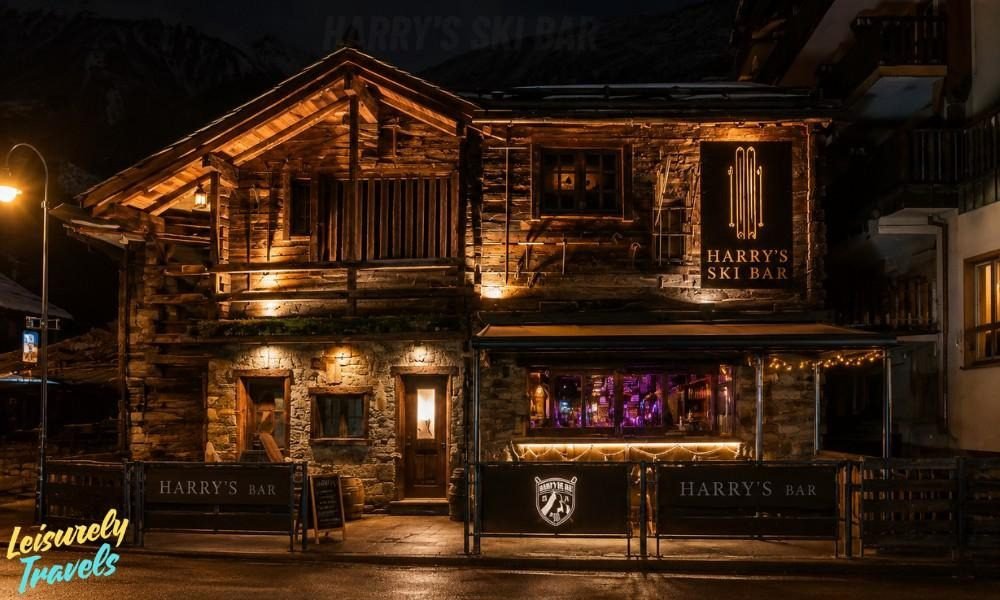
Whether skiing that day or not, a stop at Harry’s Ski Bar feels essential. Standing outside in ski gear works fine, or head into the small establishment for a pint or two to warm back up. I’ve ended up here more than once after a long day on the slopes, and there’s something about that first drink in ski boots that just hits different. It’s become a bit of a ritual for me whenever I’m in town.
Joseph’s Bar
Joseph’s Bar, inside Mont Cervin Palace, blends an ultra-modern feel with genuine coziness. After days of heavy fondue meals through winter, this makes a solid change of pace, especially seated by the fireplace at the center of the room.
Language in Zermatt
German stands as the predominantly spoken language in Zermatt, with Swiss German culture showing up in the food, mannerisms, social interactions, and architecture throughout town.
Not speaking German isn’t a real barrier, though. As an international tourist hub, Zermatt works well in English almost everywhere, making a language gap easy to overcome for anyone visiting.
What to Do If the Weather Turns
Weather in Zermatt behaves in its own specific way, the surrounding mountains either block clouds from rolling in or trap them in place for extended stretches. It might rain for days straight or stay dry for weeks, so being prepared for anything just makes sense here.
Zermatt works beautifully for outdoor sports, but bad weather can make heading to a different city feel time-consuming fast. A few solid backup plans exist regardless: a visit to the Matterhorn Museum, a shorter city trip to Brig or Sion, or a longer day trip out to Bern or Lausanne for anyone up for the extra travel time.
Money-Saving Passes
The Peak Pass unlocks real savings on excursions to Matterhorn Glacier Paradise, Gornergrat, and the Rothorn, worth grabbing before tackling multiple mountain trips in one visit.
Families traveling with kids should also know about the Wolli Card, which benefits children up to nine years old starting from just one overnight stay in Zermatt.
FAQs
How do I get to Zermatt?
There’s no airport in Zermatt itself. Fly into Geneva or Zurich, then take the train, the final stretch into town only happens by rail since Zermatt runs car-free.
Is Zermatt expensive?
Yes, generally. Hotels run on the pricier side, though budget options like Hotel Bahnhof or a stay in nearby Täsch help keep costs down.
When’s the best time to plan a Zermatt trip?
Ski season runs late November through early May, while summer peaks from mid-June to early October. Glacier skiing stays available at Klein Matterhorn year-round.
Do I need to speak German in Zermatt?
Not really. German is the predominant language, but English is widely spoken throughout this international tourist hub.
How long is the Gornergrat Railway ride?
About 33 minutes each way, climbing to 3,089 m as Europe’s highest railway.
Is Zermatt car-free?
Yes, completely. Getting around means walking, small electric buses, or the free hotel transfers many properties offer.
Can beginners hike in Zermatt?
Yes, trails vary widely in difficulty. The 5-Lakes Trail suits most fitness levels, while routes like Breithorn or Mettelhorn call for real hiking experience and proper gear.
Final Thoughts
Putting in a bit of extra planning for a Zermatt trip pays off between the missing airport, the car-free streets, and enough hotels, hikes, and fondue spots to keep you coming back for several visits. Once the logistics click into place, though, the payoff is hard to beat.
Whether the draw is the Matterhorn itself, a plate of raclette in a mountain hut, or a quiet walk through the Old Town, Zermatt tends to leave people already thinking about when they can come back. For more of the region, our Switzerland travel guides cover other towns worth pairing with a Zermatt trip.

